ClearTax handles XRechnung, ZUGFeRD, and Peppol, all in one platform. Integrate once, stay compliant through e-invoicing, e-reporting, and ViDA 2030. No rebuilds. No surprises.


Four phased milestones: know what changes and when.
Invoices processed
Countries covered
E-Invoices processed
Enterprise clients
E-invoicing is phase one of a multi-year digital transformation of German tax. ClearTax is already built for what comes next.
Structured B2B invoice exchange begins for large enterprises.
XRechnung, ZUGFeRD, Peppol BIS
GoBD archival for 8 years
Post-audit model, no government submission yet. ClearTax: Germany-ready from day one.
Invoice data starts moving closer to the tax authority.
Transaction-level invoice reporting
Hard 10-day reporting windows
New ViDA data fields required
VAT pre-fill. ClearTax: No new IT project required.
Cross-border B2B reporting becomes EU-wide.
All 27 member states
All cross-border B2B invoices
10-day reporting window to EU VIES
Replaces EC sales listings for intra-EU. ClearTax: ViDA DRR already on roadmap.
Germany uses a decentralised model: direct exchange between supplier and buyer. ClearTax handles every requirement out of the box.
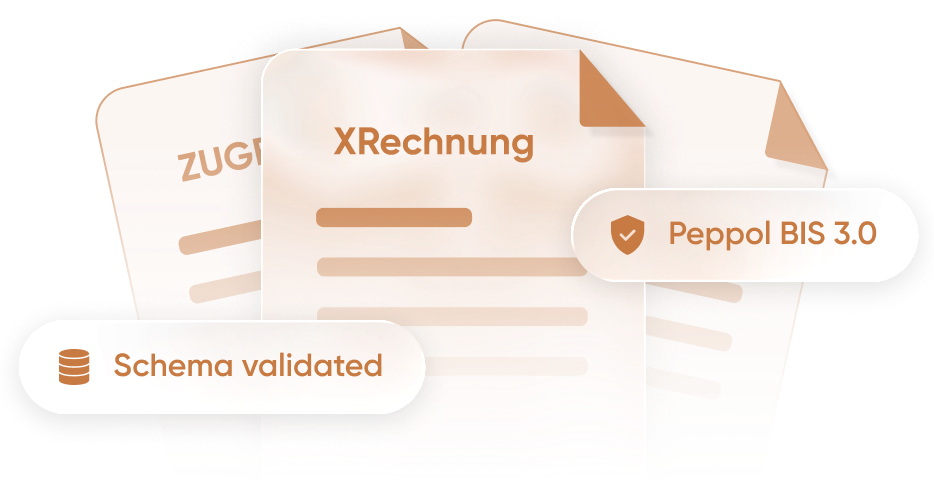
XRechnung · ZUGFeRD 2.x · Peppol BIS 3.0 - All mandatory structured invoice formats supported with full schema validation before transmission.
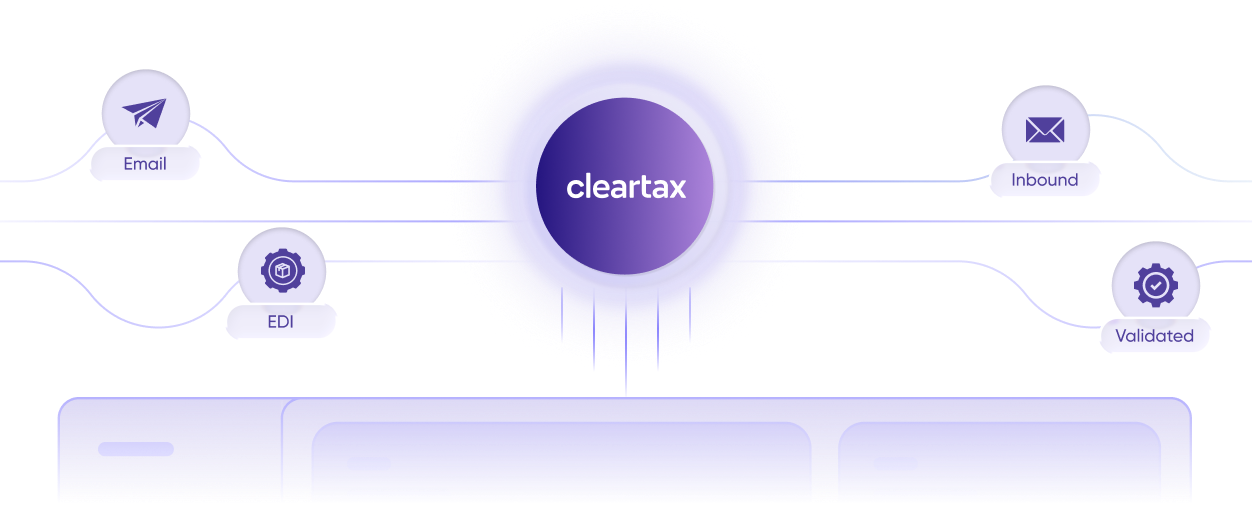
Peppol · Email · EDI on one dashboard. Every inbound and outbound channel unified. No invisible gaps, no missed invoices, no fragmented audit trail.
Deep pre-transmission checks Field completeness, business rule validation, and auto-healing before an invoice ever reaches the buyer.
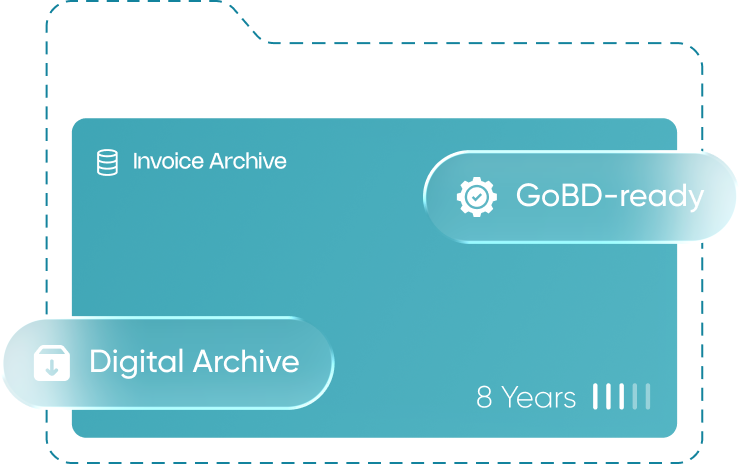
8-year GoBD-certified archival Invoices stored in immutable, structured format per §147 AO. No manual prep needed for audit readiness.
Domestic B2B & B2G transactions Covers all VAT-registered entities in Germany: both sides of every invoice, both sending and receiving.
GDPR · ISO 27001:2022 · AWS Europe Enterprise-grade encryption at rest (AES-256), SSL in transit, role-based access, and multi-AZ data residency in Europe.

Germany’s e-invoicing mandate is already in motion. Delays can create compliance gaps, tax exposure, and costly last-minute system changes.
Penalties for non-compliance
Fines up to €5,000 per invoice
VAT input deduction denied for non-compliant invoices received
Late interest at 6% p.a
Daily failures compound into multi-million euro exposure.
Tax authorities cross-reference e-invoice data against VAT returns automatically. Mismatches surface as notices. Italy's VAT gap dropped from 20% to under 10% within two years of mandate launch. Germany will follow.
E-invoicing regulations change constantly after go-live, Italy recorded 50+ post-launch changes. Without a purpose-built platform, every regulatory update consumes IT bandwidth & creates fragile, patchwork architecture.
Each new country mandate multiplies complexity. Building one-off integrations per market creates high development costs, manual workarounds, and systems that can't scale. Germany is just the start.
Most e-invoicing tools are EDI platforms or ERP add-ons with compliance bolted on. ClearTax was built from day one for tax, and it shows.
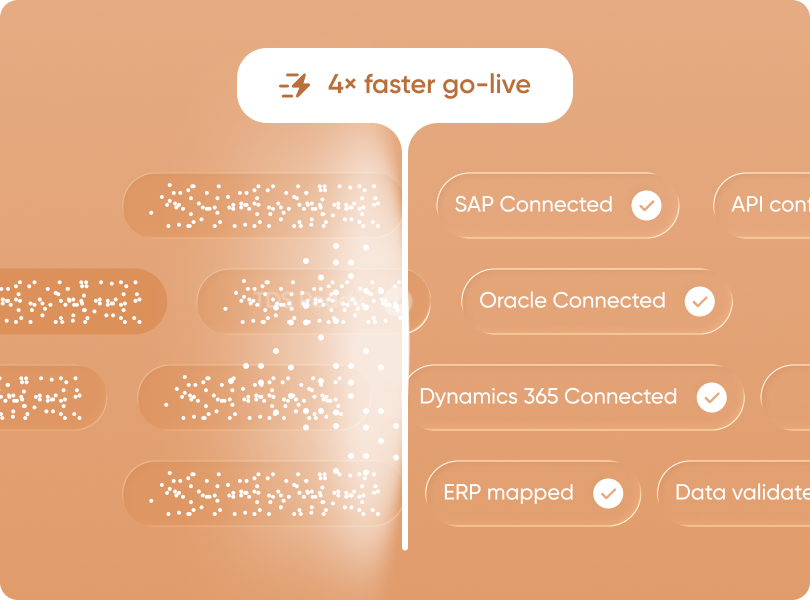
ClearTax analyses your ERP, maps your data, and configures the connection automatically. Setup moves from months to weeks, with less dependency on internal IT teams.
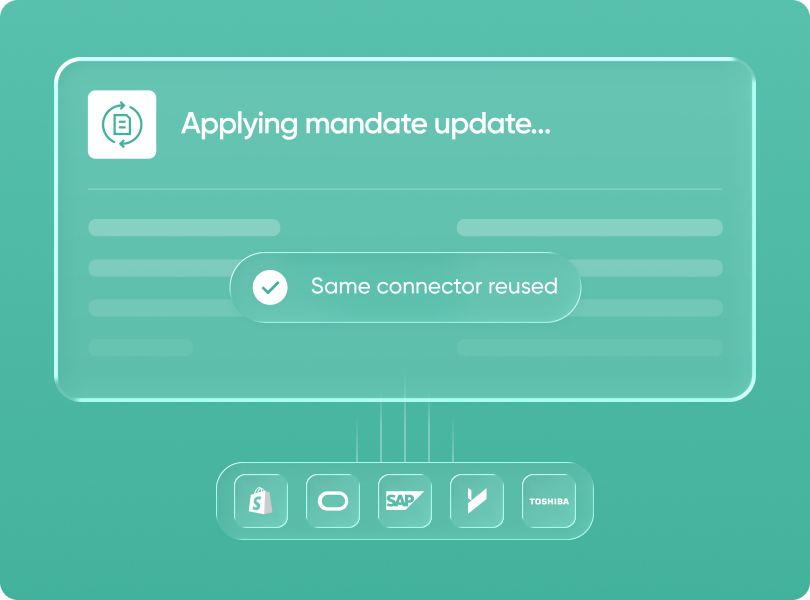
Connect once for Germany & stay ready for what comes next. As e-reporting, ViDA & new country mandates arrive, ClearTax activates country-level configurations without starting a new IT project.
ClearTax validates every invoice before submission and flags issues early. Duplicate detection, abnormal value alerts, and vendor anomaly checks help prevent failures before they affect compliance.
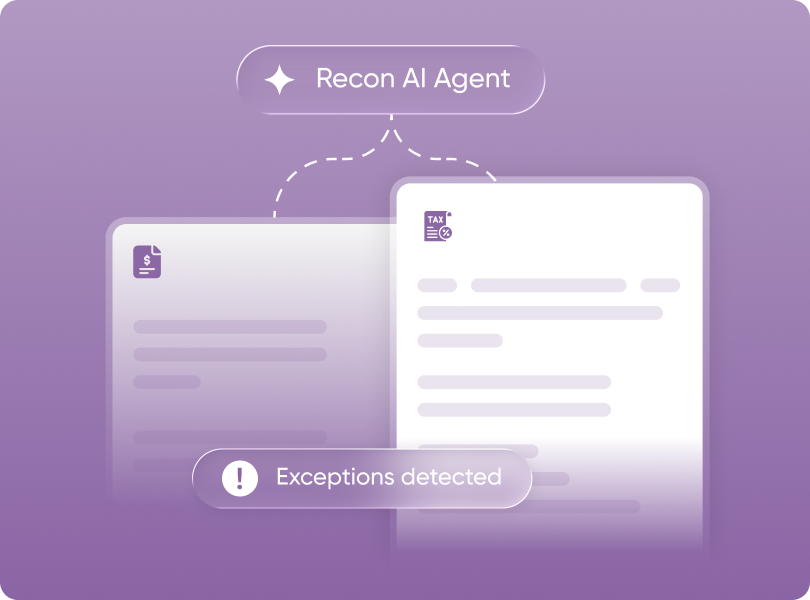
The Recon AI Agent compares ERP sales data with e-invoice data daily. It surfaces discrepancies early, so finance teams can resolve exceptions before they become notices.
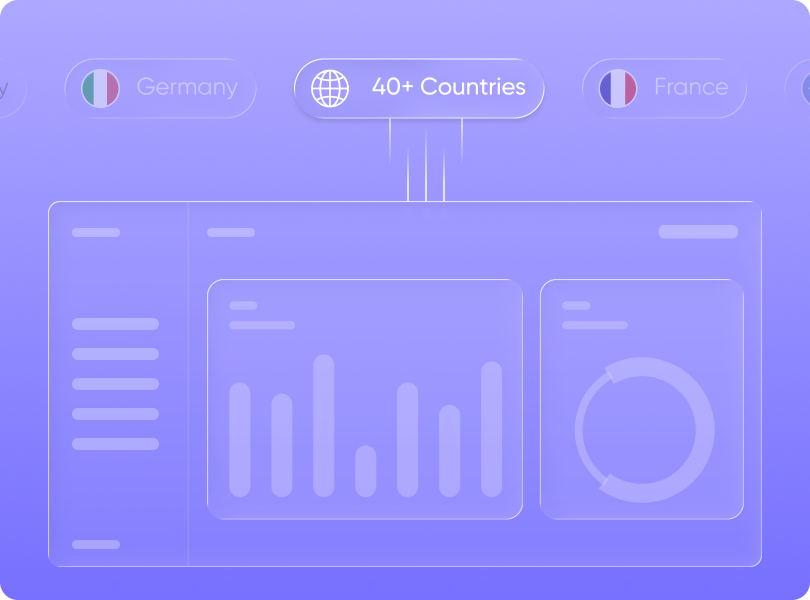
Peppol, EDI, and email invoices flow into a single dashboard for incoming and outgoing documents. Teams can track status, validation results, and errors across Germany and 40+ supported countries.
ClearTax analyses your ERP, maps your data, and configures the connection automatically. Setup moves from months to weeks, with less dependency on internal IT teams.
Connect once for Germany & stay ready for what comes next. As e-reporting, ViDA & new country mandates arrive, ClearTax activates country-level configurations without starting a new IT project.
ClearTax validates every invoice before submission and flags issues early. Duplicate detection, abnormal value alerts, and vendor anomaly checks help prevent failures before they affect compliance.
The Recon AI Agent compares ERP sales data with e-invoice data daily. It surfaces discrepancies early, so finance teams can resolve exceptions before they become notices.
Peppol, EDI, and email invoices flow into a single dashboard for incoming and outgoing documents. Teams can track status, validation results, and errors across Germany and 40+ supported countries.
E-invoicing isn't just a technology project – it transforms how your accounts receivable and payable teams operate, for the better.
Customers process valid structured invoices in days, not weeks. Working capital improves directly.
Country-specific validation catches field errors before invoices reach the customer, removing payment delays at source.
AR workflows connect directly to your ERP and order management. No manual export-import cycles.
Invoicing keeps running even when government portals go down. Revenue recognition stays on schedule.
Structured e-invoicing compresses the invoice cycle end to end. No manual data entry, no keying errors.
Real-time visibility into payables lets you optimise payment timing and capture discounts you'd otherwise miss.
Validation rules, approval trails, and invoice data captured automatically. No manual prep for audits, ever.
Faster approvals and on-time payments improve supplier trust and your negotiating position.
From global conglomerates to EU-headquartered enterprises, finance teams trust ClearTax to keep them compliant – across every mandate, in every market.

From global conglomerates to EU-headquartered enterprises, finance teams trust ClearTax to keep them compliant across every mandate, in every market.

Certified & BIS Billing 3.0 Compliant

SOC Compliant

CISM Certified

Germany Listed

Everything you need to know about Germany e-invoicing and ClearTax.
Germany works with two invoice format families. ZUGFeRD is the hybrid one, a readable PDF carrying EN 16931 XML inside it, while XRechnung and Peppol BIS 3.0 are pure structured XML. A suite worth choosing reads and writes all three, validates against the schema before an invoice leaves your system, and stores the structured copy for archival. ClearTax does all of this on one platform.
Peppol only moves invoices through certified Access Points, so your provider has to be a registered one. ClearTax is a registered Peppol Access Point and complies with the BIS Billing 3.0 standard. It also supports XRechnung, ZUGFeRD and local formats across 50+ markets, which starts to matter the moment you invoice across borders. Confirm the Access Point registration first when you compare options.
For a multinational, the real question is whether one platform covers every market you trade in, or whether you end up running a fresh project country by country. ClearTax uses a single API across 50+ countries, with country-level configuration per mandate and one dashboard for visibility. It is VeR-listed in Germany, a registered Peppol Access Point, and already built for EU ViDA from 2030. Shortlist it against tax consultants, local players and global EDI vendors, then compare on coverage.
Cloud ERPs made for complex manufacturing, like SAP S/4HANA Cloud, Oracle (Fusion and NetSuite) and Microsoft Dynamics 365, handle the production and finance side well. On their own they rarely cover German e-invoicing from start to finish. Structured format conversion, schema validation, transmission over Peppol or EDI and 8-year GoBD archival usually need a dedicated compliance layer. ClearTax connects to all three through pre-built connectors and takes care of that part.
Not reliably. Excel can store invoice data, but Germany requires structured e-invoice formats (EN 16931-compliant XML/hybrid). You’d still need software/middleware to convert Excel data into XRechnung/ZUGFeRD and validate it.
Germany’s common formats are XRechnung (structured XML) and ZUGFeRD (PDF with embedded EN 16931 XML). The invoice must be machine-readable and compliant with the European standard EN 16931.
You need software that can generate, send, receive, validate, and archive EN 16931-compliant invoices (XRechnung/ZUGFeRD). This can be your ERP’s e-invoicing capability or a third-party e-invoicing provider integrated with ERP/accounting.
It reduces manual entry, errors, and processing time; improves audit trails; supports automated matching and approvals; speeds dispute resolution; and ensures compliance. It also centralizes monitoring and helps meet archiving and reporting needs efficiently.
Yes, mainly for B2B. All businesses must be able to receive e-invoices from Jan 1, 2025; issuing becomes mandatory for everyone by Jan 1, 2028. Some exemptions exist (e.g., low-value invoices).
Any system that can accept and process EN 16931 invoices: ERP/AP automation, accounting software with e-invoice import, or an e-invoicing provider portal. Many companies use a provider to validate, route, and archive invoices centrally.
All German businesses must be able to receive structured e-invoices from 2025. Companies with revenue above 800,000 euros must issue e-invoices from 2027. By 2028, e-invoice issuance becomes mandatory for all companies. Structured invoices must follow EN 16931 formatting rules and be exchanged digitally.
Select an e-Invoicing software that supports EN 16931 formats such as XRechnung, ZUGFeRD and Peppol BIS. Ensure it integrates with your ERP, automates validation, reduces manual entry and offers secure long-term archiving. A reliable solution should simplify compliance and reduce operational effort.
No registration is required. Germany follows a decentralised model. Businesses are responsible for ensuring their invoices meet EN 16931 standards and are exchanged through approved digital channels such as Peppol, EDI or compliant e-Invoicing software. There is no clearance or central approval portal.
The enterprises that started early didn't scramble. They chose their partner, integrated once, and let compliance run itself. Be that enterprise.